Schiphol tests innovative device to filter air on the apron
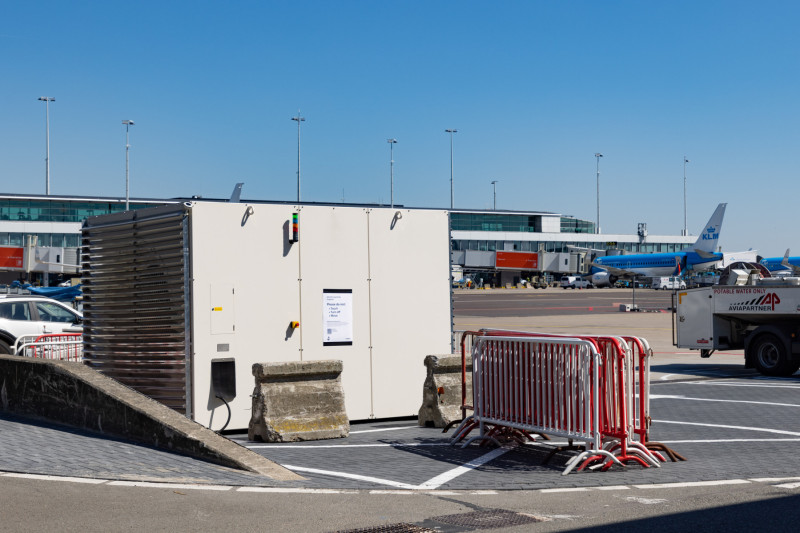
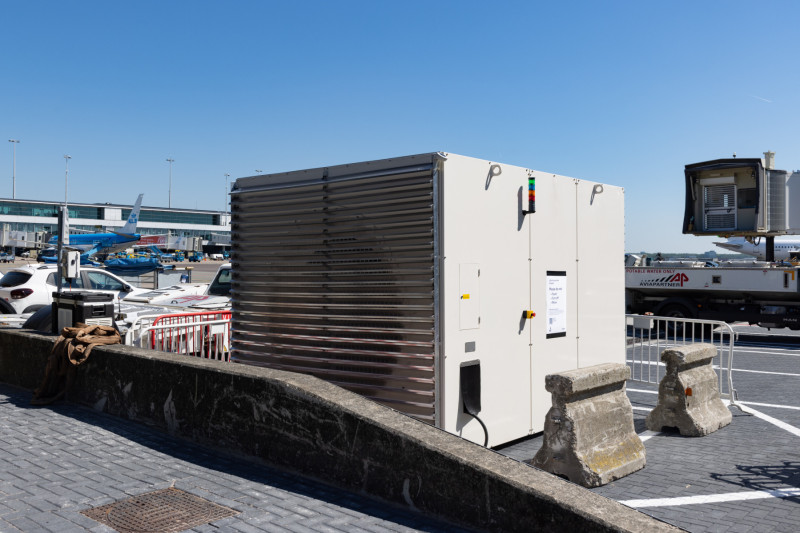
Schiphol is conducting a pilot to reduce ultrafine particles on the airport's apron. During this test, air will be cleaned by an innovative installation that has been installed next to Pier D. Piloting this special air filtration system is one of the ways in which Schiphol is improving working conditions at the airport.
The special air filtration device developed by Van Wees Innovations creates airflows that cause ultrafine particles to clump together and form larger particles that can be filtered. During this new pilot on the apron, we will be investigating whether this machine also works outdoors.
Successful pilot at fire station
Last year, Schiphol conducted a successful pilot with this device at a fire station next to the runways. The device cleaned the air almost fully. However, because the building is in use 24 hours a day, with windows and doors being opened, the reduction during the trial came to an average of 75%.
Patricia Vitalis, Executive Director Schiphol Operations at Royal Schiphol Group: 'Everyone has the right to a healthy place of work. That's why we keep on developing and investigating ways to improve the air quality on the apron. This innovation is new in the aviation sector. We’re also thinking outside the box, doing experimental research and looking at promising solutions used in other sectors.'
Other initiatives
Schiphol wants to offer employees a healthy workplace and improve the quality of life in the local environment. To achieve that, the concentrations of ultrafine particles at Schiphol must be reduced. Accordingly, the airport is busy implementing the requirements set by the Labour Inspectorate. This includes introducing a green zone around the piers, in which plane engines may no longer start up, by the end of 2027 at the latest. Together with partners from the TULIPS consortium, Schiphol is also advancing research into the use of mist to remove ultrafine particles from the air. Furthermore, modified departure procedures have been introduced at two gates with high concentrations UFP.